Hospitals do not run on buildings, equipment, or technology alone. They run on people. Every patient interaction depends on having the right clinical professionals in the right roles at the right time. From nurses and allied health professionals to specialty clinicians and support staff, a hospital’s ability to deliver safe, consistent care depends heavily on the strength of its recruitment process.
That is why healthcare recruitment is not just an HR function. It is a core operational strategy for hospitals that want to build reliable clinical teams, reduce staffing pressure, and maintain continuity of care.
Why Reliable Clinical Teams Matter
In a hospital setting, staffing gaps can quickly affect patient flow, employee morale, and service quality. When departments are short-staffed, existing team members often carry heavier workloads. Over time, this can lead to burnout, scheduling issues, slower response times, and increased turnover.
Reliable clinical teams help hospitals stay prepared. They support smoother shift coverage, better communication, and stronger patient care outcomes. For HR teams and clinical leaders, the goal is not simply to fill open positions. The real goal is to build teams that can perform consistently under pressure.
A strong healthcare recruitment strategy helps hospitals do exactly that.
Healthcare Recruitment Goes Beyond Hiring
Many people think recruitment starts when a position opens and ends when a candidate accepts an offer. In healthcare, the process is much deeper.
Effective healthcare recruitment includes understanding department needs, identifying the right skill sets, checking credentials, evaluating clinical experience, and ensuring candidates are a good fit for the hospital’s culture and pace of work.
A nurse who works well in one environment may not be the right fit for another. A clinical leader may need someone who can handle a fast-moving emergency department, support a specialty unit, or adapt quickly to rotating schedules. Healthcare recruitment helps match talent with real operational needs, not just job descriptions.
Faster Hiring Supports Better Coverage
Hospitals often operate in environments where delays are costly. When a role stays open for too long, patient care teams feel the impact. Managers may need to rely on overtime, temporary coverage, or stretched schedules to keep services running.
A structured recruitment process helps reduce these delays. With a clear hiring pipeline, hospitals can move faster from sourcing to screening, interviewing, credential review, and onboarding.
This is especially important for high-demand clinical roles. HR teams need access to qualified candidates before staffing gaps become urgent. Proactive healthcare recruitment gives hospitals a stronger position by helping them prepare ahead of demand.
Better Candidate Screening Reduces Turnover
Hiring quickly is important, but hiring correctly matters even more. A rushed hiring process can lead to mismatched expectations, poor role fit, and early turnover.
Healthcare recruitment helps hospitals improve candidate screening by looking beyond basic qualifications. Recruiters can evaluate clinical background, communication style, availability, specialty experience, licensing requirements, and long-term fit.
For clinical leaders, this means fewer surprises after onboarding. For HR teams, it means stronger retention and less time spent repeatedly filling the same positions.
When hospitals recruit with precision, they are more likely to build teams that stay, grow, and contribute consistently.
Recruitment Strengthens Workforce Planning
Healthcare staffing needs are rarely static. Patient volume changes. Seasonal demand shifts. Service lines expand. New programs launch. Existing employees retire, relocate, or move into different roles.
A strong healthcare recruitment partner helps hospitals look ahead instead of reacting late. Workforce planning allows HR and leadership teams to identify where staffing pressure may appear and create a talent strategy before the gap becomes critical.
This can include building candidate pipelines, preparing for future hiring needs, and understanding which roles may require more time to fill. With better planning, hospitals can protect clinical continuity and reduce last-minute hiring pressure.
Clinical Leaders Need the Right Support
Clinical leaders already carry major responsibilities. They manage patient care, staff performance, quality standards, schedules, and department operations. When recruitment becomes too time-consuming, it pulls attention away from clinical priorities.
Healthcare recruitment support gives clinical leaders more breathing room. Instead of spending excessive time reviewing unqualified applicants or chasing hiring updates, they can focus on evaluating the best-fit candidates and making informed decisions.
This creates a better hiring experience for everyone involved — HR teams, department leaders, candidates, and ultimately, patients.
A Reliable Team Begins With a Reliable Process
Hospitals cannot afford inconsistent hiring systems. A reliable clinical team begins with a recruitment process that is organized, responsive, and aligned with healthcare realities.
That means clear role requirements, timely communication, proper screening, credential awareness, and a strong understanding of clinical environments. It also means treating recruitment as a long-term partnership, not a one-time transaction.
How Pinnacle Alliances Supports Healthcare Recruitment
Pinnacle Alliances helps healthcare facilities build stronger clinical teams through structured recruitment support designed for the needs of hospitals, clinics, and healthcare organizations.
Our approach focuses on understanding the role, the department, the hiring timeline, and the type of professionals needed to support quality care. By helping HR teams and clinical leaders connect with qualified healthcare talent, Pinnacle Alliances supports better staffing decisions and more reliable workforce coverage.
Final Thoughts
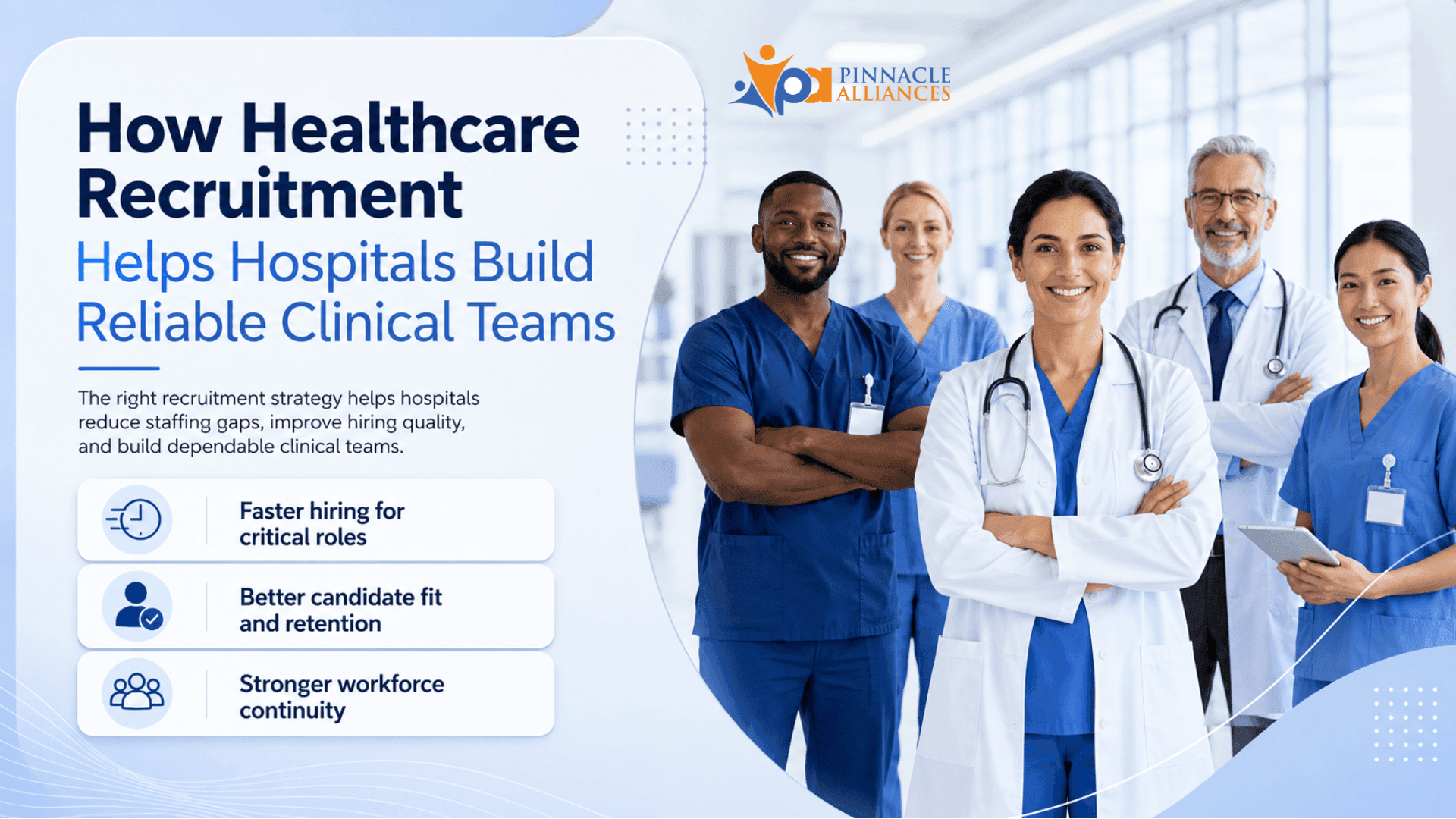
Healthcare recruitment plays a major role in how hospitals build dependable clinical teams. It helps reduce staffing gaps, improve hiring quality, support workforce planning, and give clinical leaders the support they need to focus on care delivery.
For hospitals, recruitment is not only about filling today’s open role. It is about building the team that patients, providers, and departments can depend on tomorrow.
Partner with Pinnacle Alliances to build reliable clinical teams with structured healthcare recruitment support.