Healthcare hiring has never been a simple task. Hospitals, clinics, specialty practices, and care facilities need skilled professionals who can perform under pressure, meet compliance standards, and support patient care without delays. But one important question often comes up for hiring managers and executives: should you use contract staffing or direct hire?
The answer depends on your workforce goals, patient demand, budget, urgency, and long-term staffing strategy. In healthcare, both models have value. The right choice is not always one or the other. In many cases, the strongest workforce plan uses both.
What Is Contract Staffing in Healthcare?
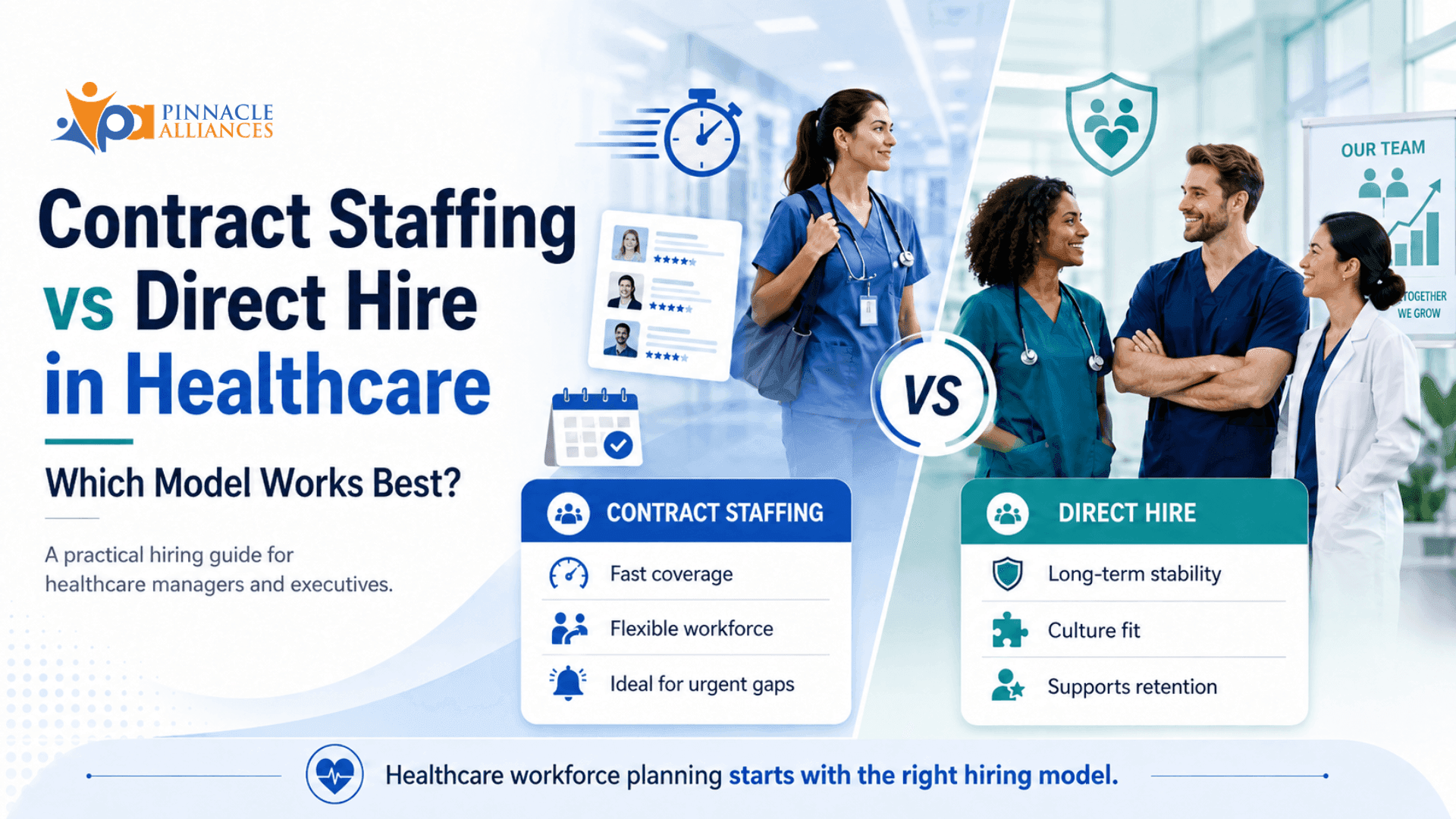
Contract staffing in healthcare means hiring professionals for a specific period, project, shift requirement, or coverage need. These workers may support short-term vacancies, seasonal demand, leave coverage, urgent staffing gaps, or special assignments.
For example, a hospital may need contract nurses during flu season, a clinic may need temporary medical assistants during expansion, or a billing department may need extra support during a claims backlog.
The biggest advantage of contract staffing healthcare solutions is flexibility. Healthcare facilities can bring in talent quickly without committing to a permanent hire right away.
What Is Direct Hire in Healthcare?
Direct hire means recruiting a candidate for a permanent role within the organization. The employee becomes part of the internal team and usually receives full benefits, long-term training, and growth opportunities.
This model works well for critical positions that require consistency, cultural alignment, leadership development, and long-term patient relationship building. Roles such as department managers, full-time nurses, physicians, healthcare administrators, and specialized clinical staff often fit the direct hire model.
Direct hire is usually a stronger option when the facility wants stability and long-term retention.
When Contract Staffing Works Best
Contract staffing is ideal when speed matters. Healthcare facilities cannot always wait weeks or months to fill an open role. Patient care still needs to continue, even when someone resigns, goes on leave, or when patient volume suddenly increases.
This model works especially well for urgent coverage gaps, temporary census increases, seasonal needs, project-based work, and hard-to-predict staffing demand.
Contract staffing also allows hiring managers to test workforce needs before making a permanent commitment. If a department is growing but leadership is unsure whether the demand will continue, contract talent can help maintain service levels while giving the organization time to evaluate.
Another benefit is reduced hiring pressure. Instead of rushing into a permanent hire, facilities can keep operations moving while continuing the search for the right long-term candidate.
When Direct Hire Works Best
Direct hire is the better choice when the role is central to your long-term operations. If the position requires deep knowledge of internal systems, strong patient relationships, team leadership, or ongoing care continuity, a permanent
employee is often the stronger investment.
Direct hire also supports culture. Healthcare is a people-centered industry, and team trust matters. Permanent employees usually have more time to understand workflows, build relationships, and grow with the organization.
For executive and leadership roles, direct hire is usually the preferred path. These positions require strategic thinking, accountability, and long-term commitment. A temporary solution may help during transition, but permanent leadership is often needed for lasting stability.
Cost Considerations
Cost is one of the biggest factors in the contract staffing vs direct hire decision. Contract staffing may appear more expensive hourly, but it can reduce certain long-term expenses such as benefits, onboarding commitments, and downtime from unfilled roles.
Direct hire may involve higher upfront recruitment effort, but it can be more cost-effective over time when the employee stays and grows with the organization.
The key is to look beyond the hourly rate or salary. Hiring managers should consider vacancy costs, overtime costs, burnout risk, patient experience, compliance needs, and productivity impact.
Sometimes, leaving a role open for too long is more expensive than using contract staffing.
Quality and Compliance Matter in Both Models
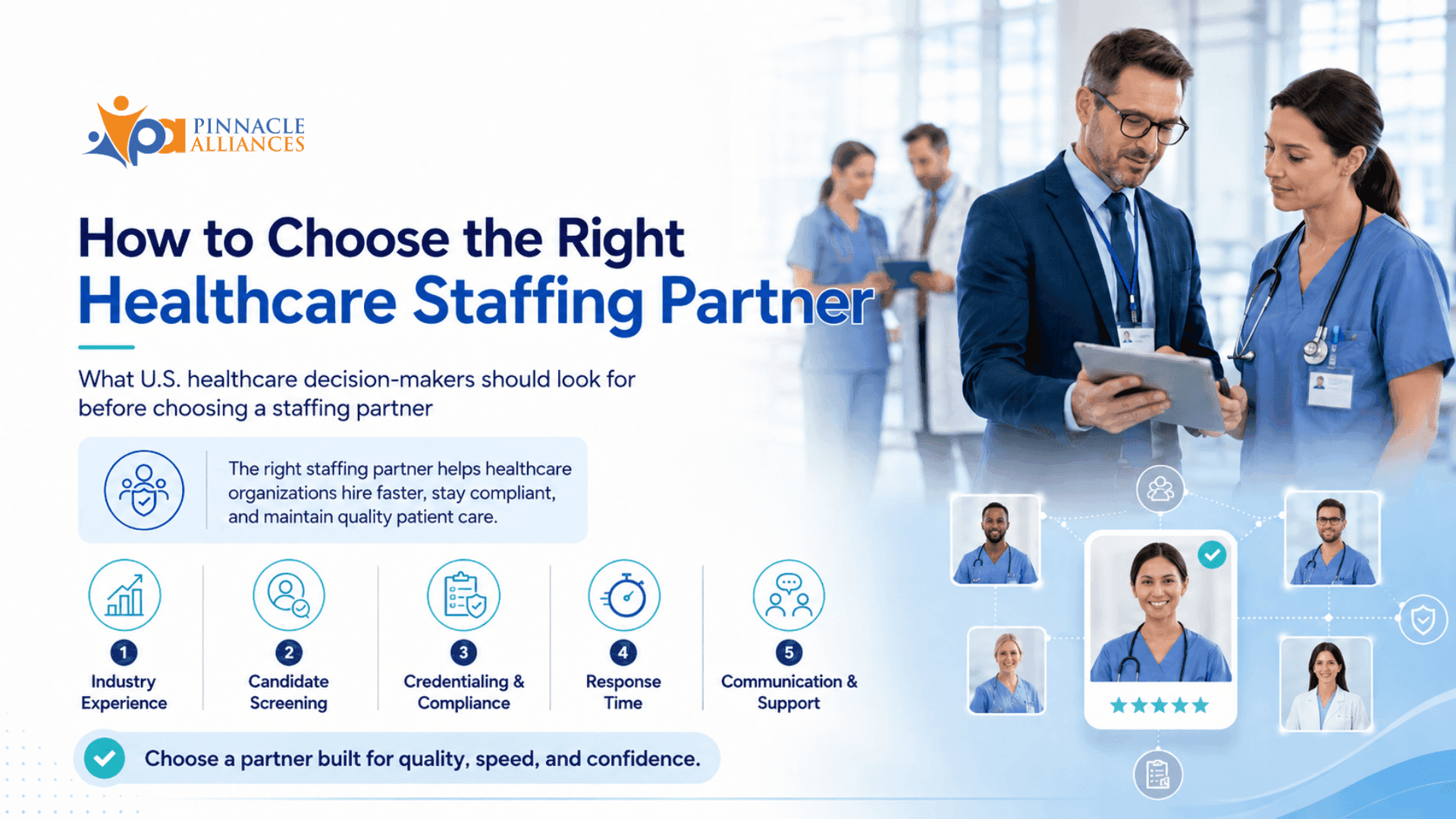
Whether you choose contract staffing or direct hire, healthcare hiring must be handled carefully. Credentials, licenses, background checks, references, experience, and compliance requirements all need to be verified before placement.
A fast hire is only valuable if the candidate is qualified and ready to perform. This is especially important in clinical environments where patient safety and regulatory standards are involved.
For direct hire, the screening process should focus on long-term fit. For contract staffing, the focus should be readiness, adaptability, and immediate skill match.
The Best Approach: A Blended Staffing Strategy
For many healthcare organizations, the best model is not contract staffing or direct hire alone. A blended strategy often works best.
Contract staffing can support immediate needs, reduce operational pressure, and prevent service disruptions. Direct hire can build long-term stability, culture, and leadership strength.
For example, a facility may use contract professionals to cover urgent gaps while recruiting permanent employees. This allows the organization to maintain patient care without rushing important hiring decisions.
Final Thoughts
Contract staffing and direct hire both play important roles in healthcare workforce planning. Contract staffing offers speed, flexibility, and coverage support. Direct hire offers stability, retention, and long-term team development.
The right choice depends on the role, urgency, budget, and future growth plans. For hiring managers and executives, the smartest decision is to match the staffing model to the actual business need.
In healthcare, staffing is not just about filling positions. It is about protecting patient care, supporting teams, and building a workforce that can perform today while preparing for tomorrow.