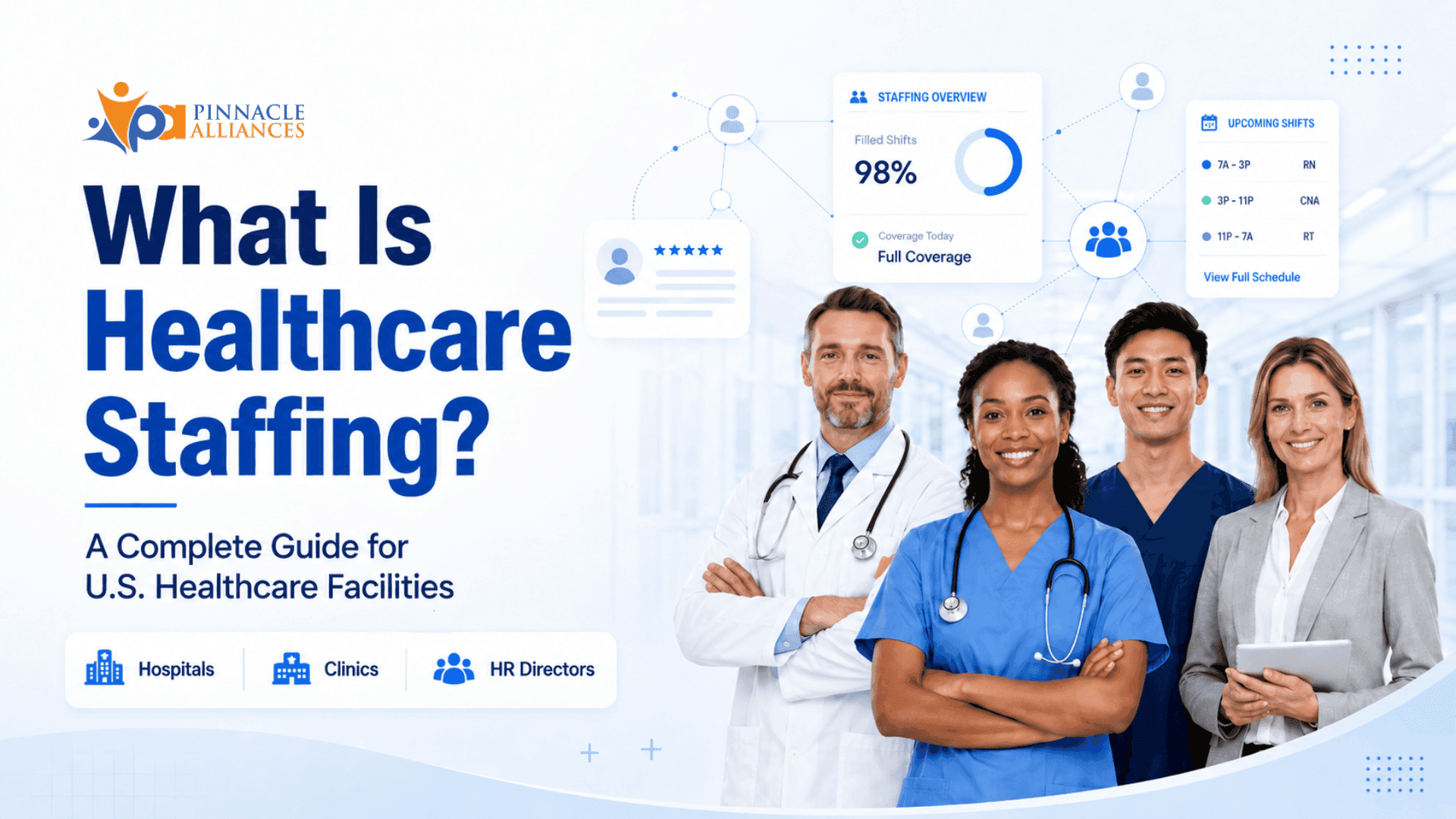
Healthcare staffing is one of the most important parts of running a safe, reliable, and patient-focused healthcare facility. Whether it is a hospital, clinic, urgent care center, long-term care facility, or specialty practice, the quality of staffing directly affects patient care, team productivity, compliance, and daily operations.
In simple terms, healthcare staffing means finding, hiring, placing, and managing qualified healthcare professionals for clinical and non-clinical roles. These roles may include registered nurses, licensed practical nurses, certified nursing assistants, medical assistants, allied health professionals, billing specialists, front-desk staff, and administrative support teams.
For U.S. healthcare facilities, staffing is not just about filling open positions. It is about making sure the right people are available at the right time, with the right skills, credentials, and experience.
Why Healthcare Staffing Matters
Every healthcare facility depends on people. Doctors, nurses, therapists, technicians, billing teams, schedulers, and support staff all play a role in keeping care delivery smooth. When staffing is strong, patients receive faster service, internal teams feel supported, and operations run with fewer delays.
When staffing is weak, the impact is felt quickly. Patients may wait longer, employees may feel overwhelmed, documentation can fall behind, and compliance risks may increase. In many facilities, even one unfilled role can create pressure across an entire department.
This is why healthcare staffing has become a key priority for HR directors, facility administrators, and operations leaders across the U.S.
What Does Healthcare Staffing Include?
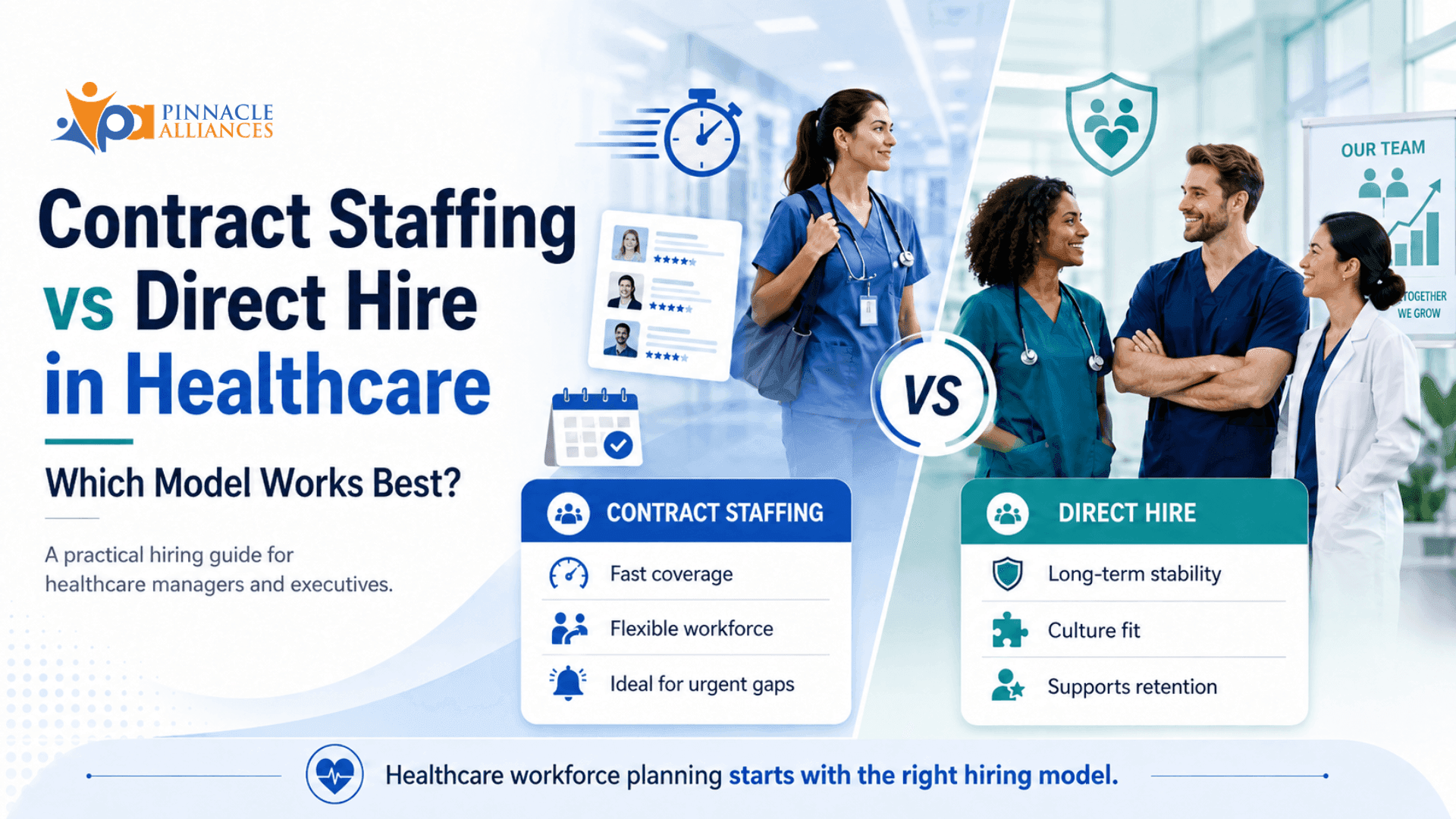
Healthcare staffing can cover several different workforce needs depending on the facility. Some organizations need temporary staff to manage seasonal demand, while others need permanent hires for long-term stability.
Common healthcare staffing areas include:
Nursing staffing: Registered nurses, LPNs, CNAs, and specialty nurses for hospitals, clinics, and care facilities.
Allied health staffing: Medical assistants, lab technicians, radiology techs, physical therapy assistants, pharmacy technicians, and other clinical support professionals.
Administrative staffing: Front office coordinators, patient schedulers, medical records staff, insurance verification specialists, and billing support.
Permanent placement: Recruiting full-time healthcare professionals for long-term roles.
Temporary or contract staffing: Providing short-term professionals to cover leaves, peak workload, census changes, or urgent gaps.
Credentialing support: Helping verify licenses, certifications, background checks, experience, and compliance documents before placement.
The Difference Between General Staffing and Healthcare Staffing
Healthcare staffing is different from general staffing because healthcare roles often require strict credential checks, compliance awareness, clinical experience, and industry-specific hiring knowledge.
A general staffing agency may focus on basic job matching. Healthcare staffing requires deeper understanding of patient care environments, shift coverage, licensing requirements, specialty skills, and facility needs.
For example, hiring a nurse for a hospital is not the same as hiring an office employee. The facility must consider license status, clinical background, specialty experience, state requirements, availability, and patient care responsibilities.
This makes healthcare staffing more sensitive, more structured, and more important to get right.
Common Challenges Healthcare Facilities Face
Many U.S. healthcare facilities struggle with staffing because demand changes quickly. Patient volumes rise and fall, employees resign, leaves of absence happen, and urgent coverage gaps appear without much notice.
Some of the most common staffing challenges include:
- Finding qualified candidates quickly
- Managing high turnover
- Reducing burnout among existing employees
- Maintaining proper shift coverage
- Keeping up with credentialing requirements
- Hiring for specialized clinical roles
- Balancing cost with quality staffing
For HR directors and administrators, these challenges can take up a lot of time. Recruiting, screening, interviewing, verifying documents, and coordinating onboarding can pull attention away from strategic workforce planning.
How Healthcare Staffing Supports Better Patient Care
Good staffing supports better care in a very direct way. When healthcare workers are not overloaded, they can spend more time focusing on patients. When shifts are properly covered, teams can respond faster. When administrative roles are filled, clinical staff do not have to waste time handling tasks outside their main responsibilities.
Healthcare staffing also helps facilities maintain continuity. Instead of reacting to last-minute shortages, facilities can build stronger workforce pipelines and reduce operational stress.
For patients, this means better communication, shorter wait times, more organized care, and a smoother overall experience.
Why Facilities Work With Healthcare Staffing Partners
Many hospitals and clinics choose to work with healthcare staffing partners because recruiting internally can be time-consuming. A staffing partner can help source candidates, screen applicants, manage documentation, and support faster hiring.
The right staffing partner understands healthcare operations and can provide support for both clinical and non-clinical roles. This helps facilities stay flexible, reduce hiring delays, and maintain better workforce stability.
For smaller clinics, staffing support can help avoid administrative overload. For larger hospitals, it can help manage volume, department-specific needs, and ongoing workforce shortages.
Choosing the Right Healthcare Staffing Partner
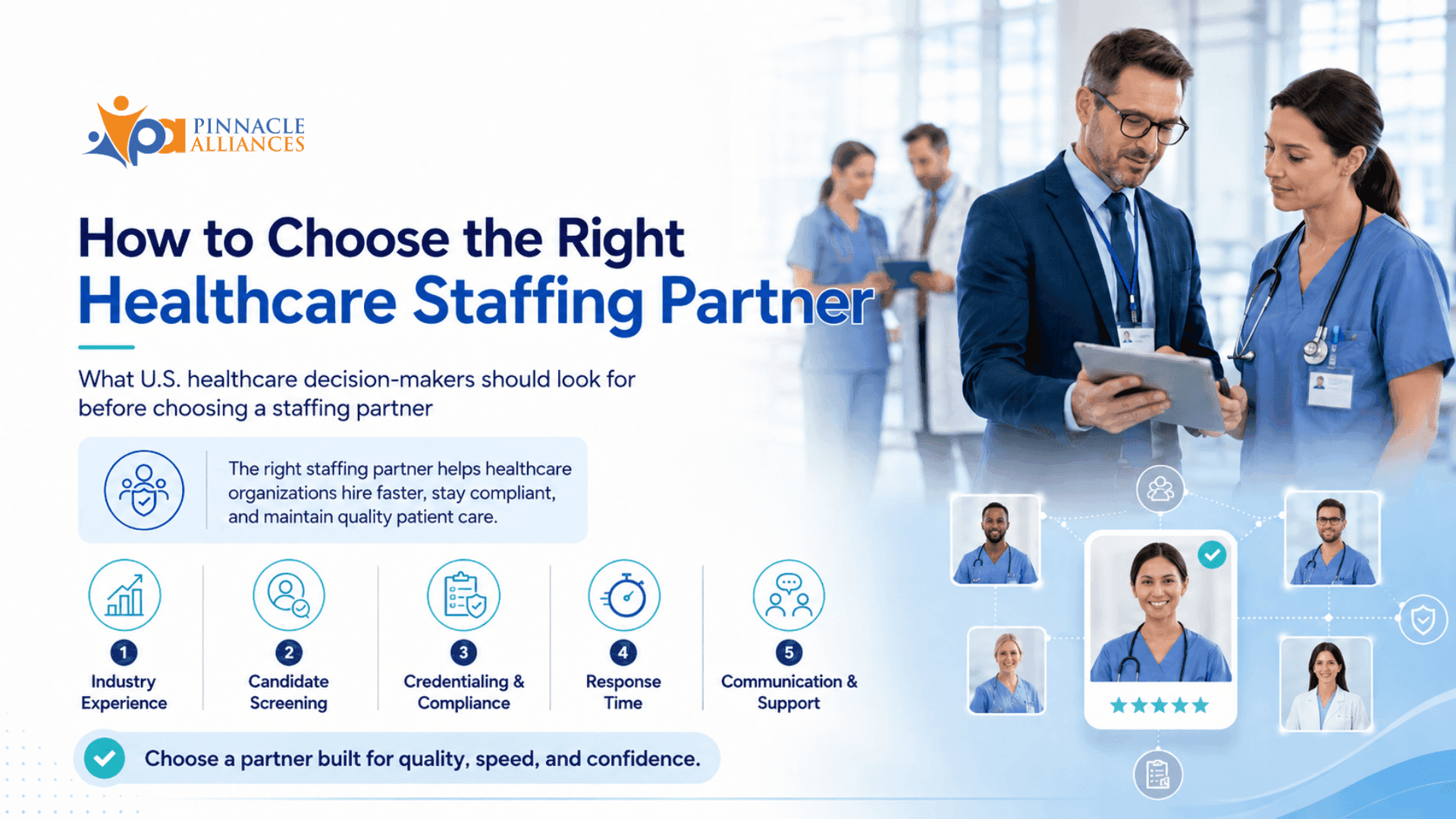
When selecting a healthcare staffing partner, facilities should look beyond resumes. The right partner should understand healthcare workflows, credential requirements, communication expectations, and the importance of dependable coverage.
A strong partner should be able to support:
- Qualified candidate sourcing
- Role-specific screening
- Credential and compliance checks
- Fast communication
- Flexible staffing models
- Long-term workforce planning
Most importantly, the partner should understand that healthcare staffing is not just about hiring people. It is about protecting patient care, supporting internal teams, and keeping operations moving.
Final Thoughts
Healthcare staffing plays a major role in the success of U.S. healthcare facilities. From hospitals and clinics to specialty practices and long-term care centers, having the right workforce in place helps improve care quality, reduce stress, and strengthen daily operations.
For HR directors and healthcare administrators, staffing is no longer just a hiring function. It is a strategic part of patient care, operational performance, and long-term facility growth.
With the right healthcare staffing approach, facilities can build stronger teams, respond faster to workforce needs, and create a more reliable care environment for both patients and staff.