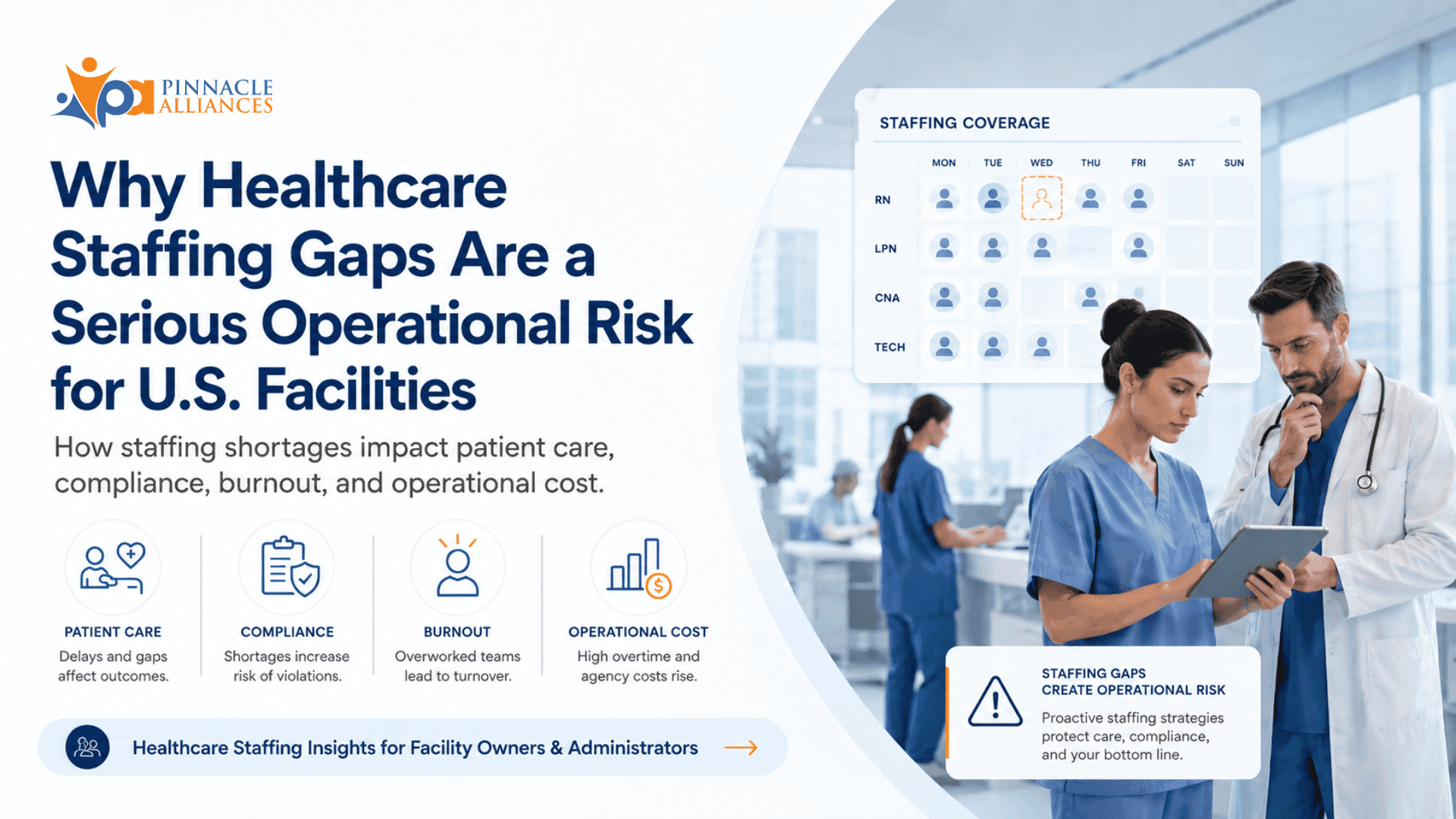
Healthcare staffing gaps are often discussed as a hiring problem. But for U.S. healthcare facilities, they are much more than open positions on a job board. A staffing gap can affect patient safety, staff morale, compliance, revenue, scheduling, and the overall stability of daily operations.
For facility owners, administrators, and operations leaders, the real concern is not only whether a role is vacant. The bigger question is what happens to the facility when essential roles remain unfilled, shifts are stretched, and existing teams are forced to carry more than they can safely manage.
Across the U.S., workforce pressure continues to be a long-term concern. HRSA tracks healthcare workforce supply and demand by profession, and nursing shortage projections continue to show pressure in key roles through the coming years.
Staffing Gaps Directly Affect Patient Care
Every healthcare facility depends on timing, accuracy, and consistency. When staffing levels fall short, the impact reaches the patient experience very quickly. Delays in response time, longer wait periods, missed follow-ups, rushed documentation, and inconsistent handoffs can all become more common.
In healthcare, small delays can create larger risks. A missed update, a slow response, or an incomplete handoff can affect the quality of care being delivered. Research has long connected lower nurse staffing levels with higher risks of poor patient outcomes, including safety and workload-related issues.
This is why healthcare staffing gaps cannot be treated as a temporary inconvenience. They can become a direct operational risk when they interrupt the facility’s ability to deliver timely, organized, and dependable care.
Existing Staff Carry the Hidden Burden
When a facility is short-staffed, the workload does not disappear. It shifts to the people who are already working.
Nurses, allied health professionals, administrative teams, billing staff, and supervisors often absorb the pressure. They may take extra shifts, manage more patients, cover unfamiliar duties, or complete documentation after hours. Over time, this leads to fatigue, frustration, burnout, and higher turnover.
This creates a cycle that is difficult to break. A staffing shortage increases pressure on current employees. That pressure causes burnout. Burnout leads to resignations or reduced engagement. Then the facility faces even more staffing gaps.
For administrators, this is one of the most serious risks. Losing experienced employees does not only create another vacancy. It also removes institutional knowledge, workflow familiarity, patient relationships, and team stability.
Compliance and Documentation Can Suffer
Healthcare operations are heavily documentation-driven. Whether it is patient records, billing notes, compliance reporting, credential tracking, or shift records, accuracy matters.
When teams are short-staffed, documentation can become rushed or delayed. Supervisors may have less time to review records. Administrative teams may fall behind on claims, authorizations, follow-ups, or internal reporting. In some facilities, clinical staff may be pulled into non-clinical tasks simply because there is no one else available.
This creates compliance exposure. It can also increase billing errors, claim delays, audit concerns, and communication gaps between departments.
For long-term care facilities, staffing regulations have also been an active policy area. CMS finalized minimum staffing standards in 2024, and later federal actions changed parts of that rule, showing how staffing expectations can remain a moving compliance issue for facility leaders.
Staffing Gaps Increase Operational Costs
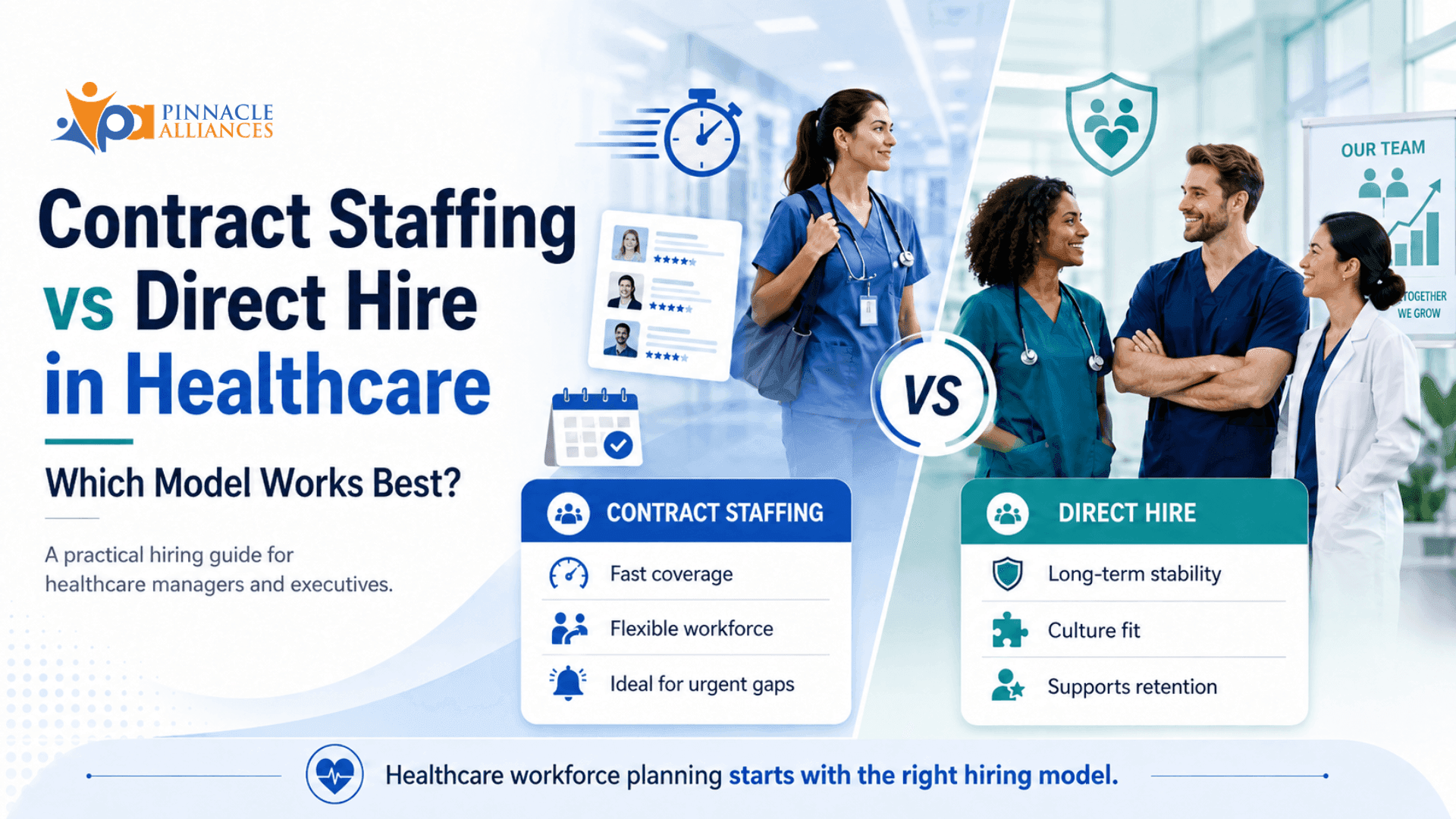
Many facilities try to solve urgent staffing shortages through overtime, last-minute agency coverage, or temporary labor. While these options may help in the short term, they can become expensive if they are used too often.
Overtime can increase payroll costs and employee fatigue. Temporary staffing may increase expenses while also requiring extra onboarding and supervision. Frequent schedule changes can create confusion and reduce team efficiency.
The financial impact is not always visible in one line item. Staffing gaps can increase costs across multiple areas, including recruitment, training, overtime, claims delays, patient leakage, turnover, and lower productivity.
For facility owners, this means staffing gaps are not just an HR issue. They are a margin issue.
Patient Experience and Reputation Are at Risk
Patients and families may not understand the staffing challenges behind the scenes, but they feel the results. Long wait times, delayed communication, rushed interactions, and inconsistent service can affect trust.
In a competitive healthcare market, reputation matters. A facility known for slow responses, poor communication, or inconsistent care may struggle to retain patients, attract referrals, and build community trust.
Staffing stability plays a major role in how patients experience care. When the right people are in the right roles, communication improves, workflows move faster, and patients feel better supported.
Facilities Need a Proactive Staffing Strategy
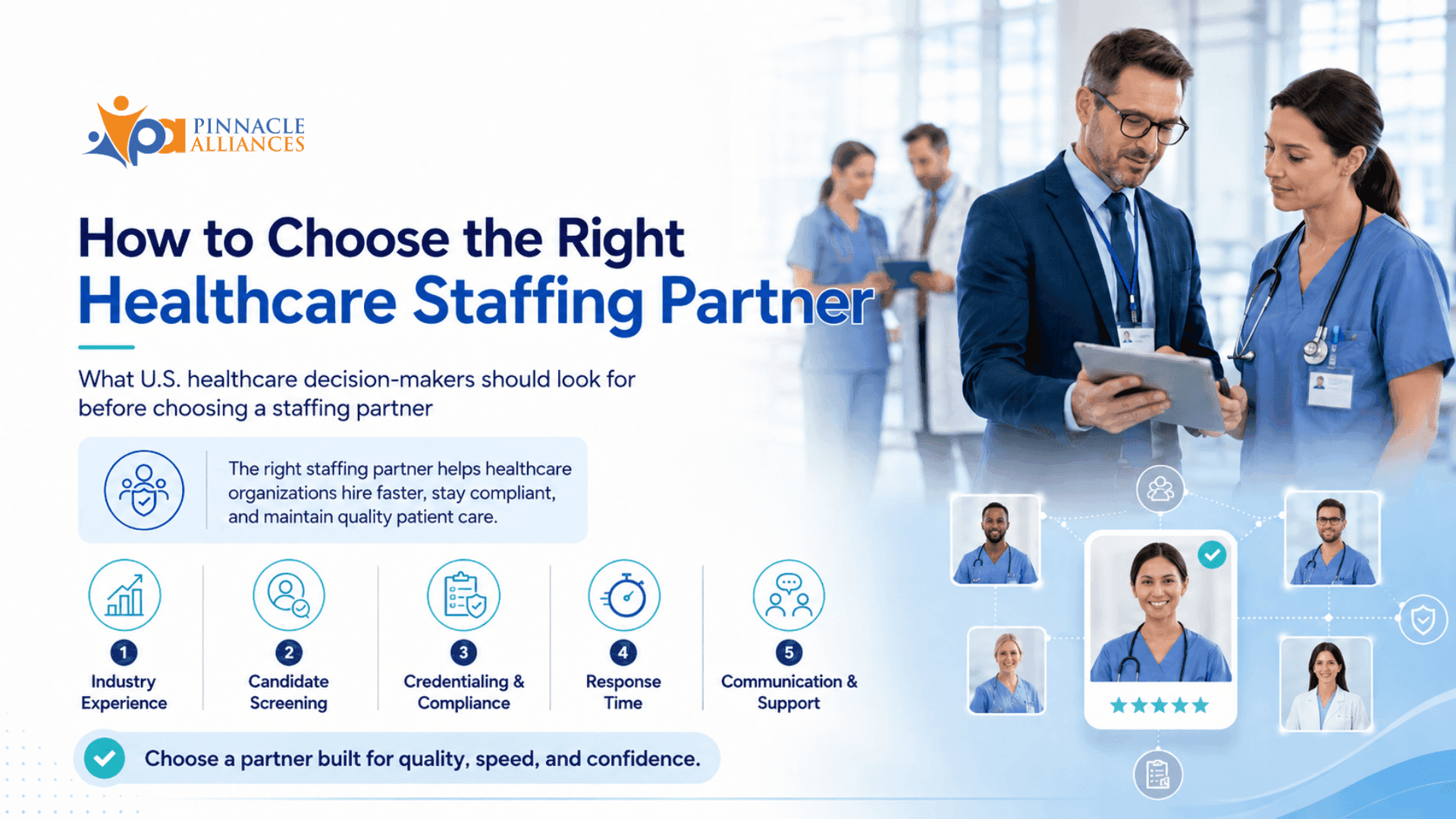
The facilities that manage staffing gaps best are usually the ones that plan before the pressure becomes urgent. This means building stronger workforce pipelines, improving credential tracking, forecasting demand, cross-training support teams, and partnering with staffing experts who understand healthcare operations.
A good staffing strategy should not only focus on filling shifts. It should support continuity, compliance, patient care, and long-term workforce stability.
How Pinnacle Alliances Can Support Healthcare Facilities
Pinnacle Alliances helps U.S. healthcare facilities manage workforce challenges with structured healthcare staffing support. From nursing and allied health staffing to operational workforce planning, the goal is to help facilities reduce staffing pressure and maintain dependable care delivery.
Healthcare staffing gaps are serious because they affect everything a facility depends on: people, patients, compliance, cost, and continuity. With the right staffing partner, facilities can move from reactive hiring to a more stable, planned, and operationally sound workforce model.