Hiring in healthcare is not just about filling an open role quickly. It is about making sure the person stepping into that role is qualified, verified, compliant, and ready to work safely with patients. For hospitals, clinics, long-term care facilities, diagnostic centers, and healthcare staffing teams, this makes healthcare credentialing one of the most important steps before placement.
A strong candidate may have the right experience, a good interview, and the availability your team needs. But until licenses, certifications, work history, background details, and compliance documents are properly verified, there is still risk. In healthcare, that risk can affect patient safety, reimbursement, audits, facility reputation, and operational continuity.
That is why verified talent matters before placement.
Credentialing Is More Than Paperwork
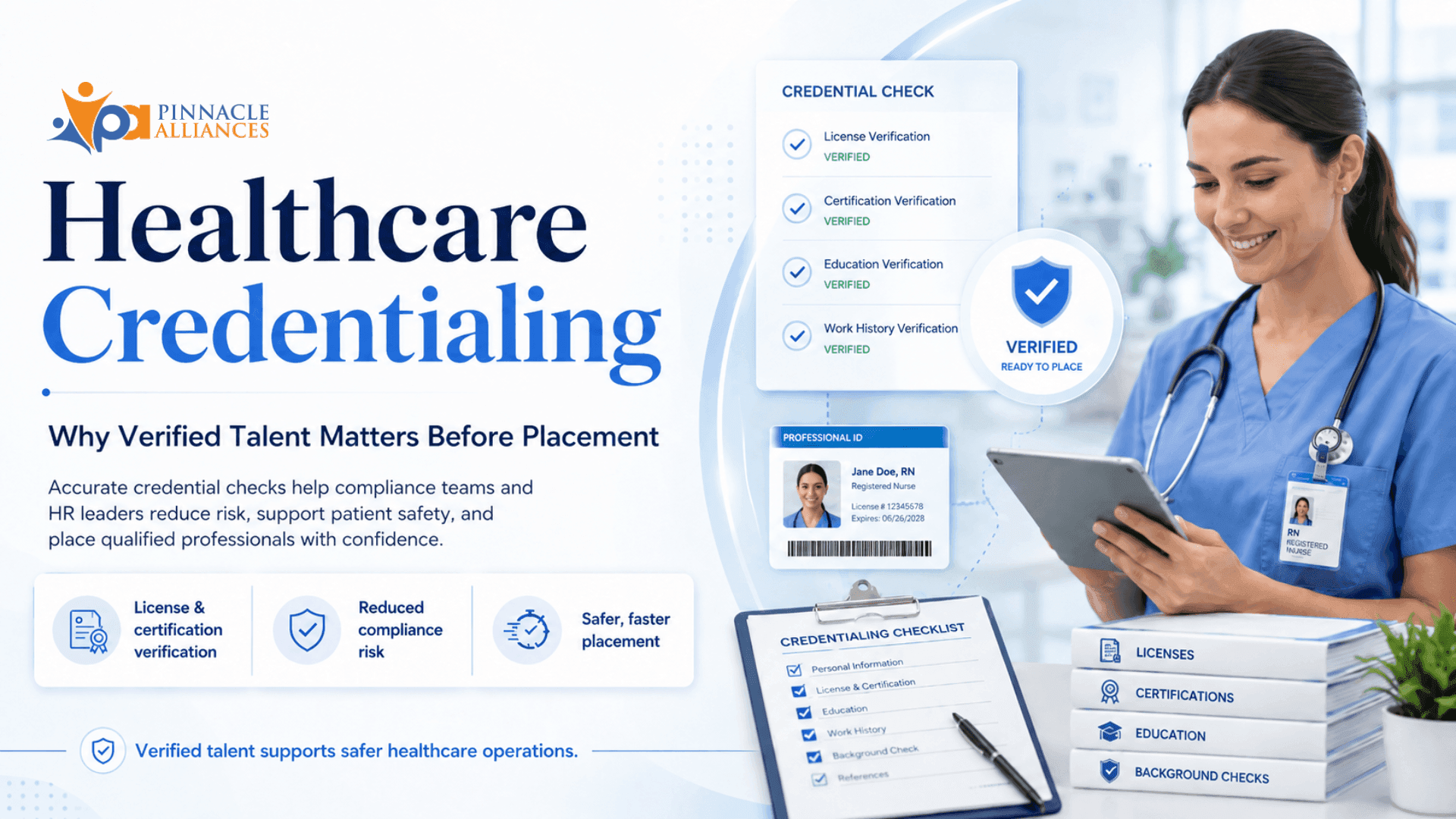
Healthcare credentialing is often seen as an administrative process, but it carries much more weight than simple document collection. It confirms whether a healthcare professional has the required qualifications, active licenses, certifications, and legal clearance to perform the role they are being considered for.
For example, a nurse, therapist, medical assistant, physician, billing professional, or allied health worker may need different types of verification depending on the position. This can include state licenses, board certifications, CPR or BLS credentials, immunization records, education history, employment references, background checks, drug screening, and facility-specific compliance requirements.
When these items are checked properly, healthcare employers gain confidence before the candidate enters the workplace.
Why Verification Matters Before Placement
In healthcare staffing, speed matters. Facilities often need coverage urgently, especially during peak demand, staff shortages, leaves, seasonal pressure, or sudden patient volume increases. But speed without verification can create serious problems.
Placing an unverified candidate can lead to compliance gaps, delayed start dates, failed audits, patient care disruptions, or even removal from assignment. For HR leaders, this creates extra work. For compliance teams, it creates preventable risk. For facility managers, it can affect scheduling and coverage.
Credentialing before placement helps avoid those issues. It ensures the candidate is not only available but also ready, approved, and aligned with the facility’s standards.
Protecting Patients and the Facility
Every healthcare facility has a responsibility to protect patients. That protection starts long before a professional begins their first shift. Credentialing helps confirm that the individual has the training, licensing, and background needed to deliver care or support healthcare operations safely.
It also protects the facility. Healthcare organizations operate in a highly regulated environment, where documentation must be accurate and accessible. If a facility is audited, missing or outdated credentials can create compliance concerns. Even small errors in documentation can lead to unnecessary stress for HR and compliance teams.
Verified talent reduces that pressure because the facility knows the required checks have been completed before placement.
Reducing Hiring Delays
One of the biggest frustrations in healthcare hiring is finding the right candidate, only to face delays because documents are missing or credentials are incomplete. A candidate may accept the role, but if their license verification, background check, immunization record, or certification is not ready, the start date can be pushed back.
That delay affects everyone. Schedules must be adjusted. Existing staff may need to cover extra shifts. Managers may have to restart parts of the hiring process. Patients and departments may feel the impact.
A structured healthcare credentialing process helps prevent these delays by identifying missing items early and keeping the placement process organized.
Supporting HR and Compliance Teams
HR leaders and compliance teams already manage a heavy workload. They are responsible for recruiting, onboarding, documentation, policy alignment, audits, employee records, and ongoing workforce needs. When credentialing is disorganized, it adds more pressure to already busy teams.
A clear credentialing workflow makes the process easier to manage. It gives teams visibility into what has been completed, what is pending, and what needs follow-up. This improves communication between recruiters, candidates, compliance staff, and facility leadership.
Instead of rushing at the last minute, teams can move candidates forward with confidence.
Building Trust With Healthcare Facilities
For staffing partners and recruitment teams, credentialing is also a trust factor. Healthcare facilities want to know that the candidates being presented are not just qualified on paper but properly verified before placement.
When staffing teams consistently provide credential-ready candidates, facilities begin to trust the process. They know the partner understands healthcare compliance, respects patient safety, and values operational reliability.
That trust can lead to stronger relationships, faster approvals, and smoother placements.
The Cost of Skipping Proper Credentialing
Skipping or rushing credentialing may seem like a way to save time, but it often creates bigger problems later. Missing documents, expired licenses, incomplete checks, or unclear work history can cause assignment cancellations, compliance reviews, or staffing disruptions.
In healthcare, prevention is always better than correction. It is much easier to verify credentials before placement than to fix a compliance issue after the candidate has already started.
Final Thoughts
Healthcare staffing requires more than quick hiring. It requires accuracy, responsibility, and a process that protects both patients and facilities. Healthcare credentialing gives compliance teams and HR leaders the confidence that every candidate placed has been properly reviewed before entering the workplace.
Verified talent helps reduce risk, improve onboarding, prevent delays, and support safer healthcare operations. For any healthcare organization, credentialing is not just a step in the hiring process. It is the foundation of responsible placement.