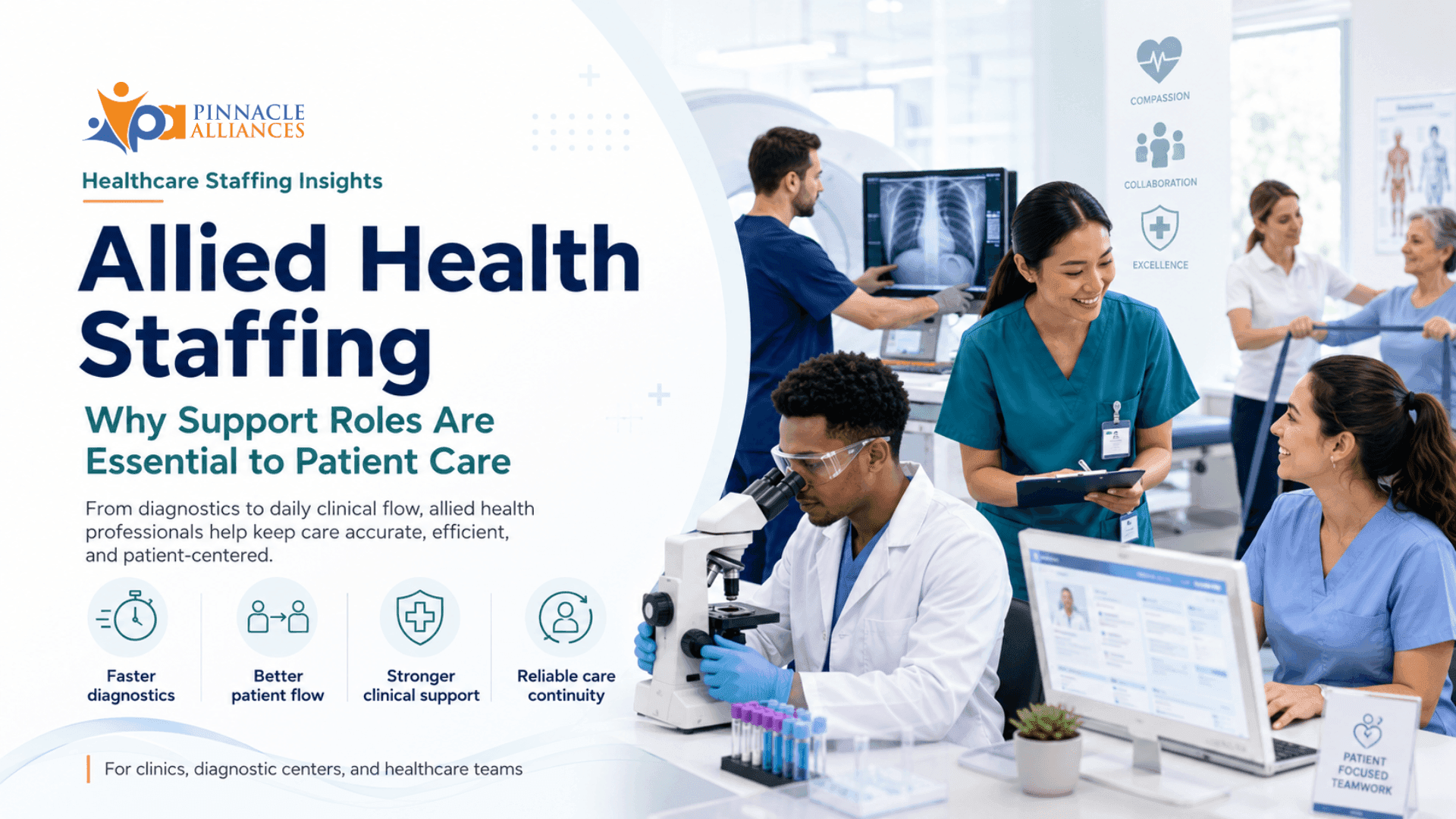
In healthcare, doctors and nurses often become the face of patient care. They are the people patients remember most clearly during a hospital visit, clinic appointment, or diagnostic test. But behind every smooth patient experience, there is another group of professionals working just as hard to keep care moving: allied health professionals.
From medical assistants and radiology technologists to lab technicians, respiratory therapists, physical therapy assistants, phlebotomists, and diagnostic support staff, allied health workers play a critical role in the daily functioning of clinics, diagnostic centers, specialty practices, and healthcare facilities.
This is why allied health staffing is not just a hiring need. It is a patient care priority.
Patient Care Depends on More Than One Role
A patient’s journey rarely begins and ends with a doctor. Before a provider even enters the room, multiple support roles may already be involved.
Someone checks the patient in. Someone verifies information. Someone prepares the exam room. Someone collects samples, performs imaging, records vitals, updates records, or assists with testing. In diagnostic centers, allied health professionals are often the ones who guide patients through procedures, explain the process, and ensure results are collected accurately.
When these roles are properly staffed, the entire care experience becomes smoother. Patients wait less, providers stay focused, and facilities operate with better structure.
Support Roles Help Providers Work at Their Best
Physicians, nurse practitioners, specialists, and clinical leaders cannot do everything alone. When support roles are understaffed, providers often have to take on extra tasks that pull them away from direct patient care.
This can lead to longer appointments, delayed documentation, slower test turnaround, and unnecessary stress across the team.
Strong allied health staffing allows providers to focus on what they are trained to do: diagnose, treat, guide, and support patients. At the same time, allied health professionals handle essential clinical and technical responsibilities that keep the workflow moving.
In simple terms, the right support team gives providers more time and patients better attention.
Diagnostic Accuracy Starts With Skilled Support
In clinics and diagnostic centers, accuracy matters at every step. A lab sample must be collected correctly. Imaging must be performed with care. Patient details must be entered properly. Equipment must be handled safely. Results must be routed to the right provider.
Even small mistakes can create delays, repeat testing, patient frustration, or added operational pressure.
Allied health professionals bring technical skill, process knowledge, and attention to detail. Their work directly supports accurate diagnosis and timely treatment. For diagnostic centers especially, these roles are not “extra help.” They are part of the foundation of reliable care.
Staffing Gaps Can Affect the Patient Experience
When allied health roles are understaffed, patients can feel it quickly.
Appointments may run behind schedule. Phone calls may go unanswered. Rooms may not be ready on time. Test results may take longer to process. Staff may appear rushed or overwhelmed.
Even when the quality of care is strong, operational delays can affect how patients feel about the facility. In today’s healthcare environment, patient experience matters. People expect clear communication, organized service, and timely care.
A well-staffed allied health team helps create that experience.
Clinics Need Flexible Staffing Support
Clinics and diagnostic centers often deal with changing patient demand. Some weeks are busier because of seasonal illness, provider schedules, community health needs, or increased testing volume. Other times, staff absences, resignations, or hiring delays create sudden gaps.
Allied health staffing gives healthcare facilities more flexibility. Instead of overloading current employees or slowing down services, facilities can bring in trained professionals to support daily operations.
This is especially valuable for smaller clinics and specialty practices that may not have large internal hiring teams.
Better Staffing Supports Employee Retention
When healthcare teams are consistently understaffed, burnout becomes a serious concern. Existing employees may be asked to cover extra shifts, handle more patients, or manage duties outside their usual role.
Over time, this pressure can lead to frustration, mistakes, and turnover.
Reliable allied health staffing helps protect the team already in place. When workloads are balanced, employees can perform better and feel more supported. This creates a healthier workplace and a more consistent patient care environment.
Allied Health Roles Are Essential, Not Secondary
The word “support” should not make these roles sound less important. Allied health professionals are deeply connected to the quality, speed, and safety of care delivery.
They help patients feel comfortable. They help providers stay efficient. They help clinics stay organized. They help diagnostic centers produce accurate results. Most importantly, they help keep the patient journey moving from start to finish.
Final Thoughts
Allied health staffing is essential for healthcare facilities that want to deliver dependable, organized, and patient-focused care. Clinics and diagnostic centers rely on these professionals every day, even when their work happens quietly in the background.
When support roles are staffed properly, everyone benefits: patients receive smoother care, providers work with better focus, and healthcare facilities operate with greater confidence.
In modern healthcare, strong patient care is never the result of one person alone. It takes a complete team — and allied health professionals are a vital part of that team.